Best Practices
How Mobile Changes Maintenance Reporting on the Shop Floor
Mobile technology is reshaping how maintenance teams capture, report and act on data right where the work happens. Learn how mobile reporting drives faster response, better accuracy and stronger decisions.
Rhys Heaven-Smith
8 min read
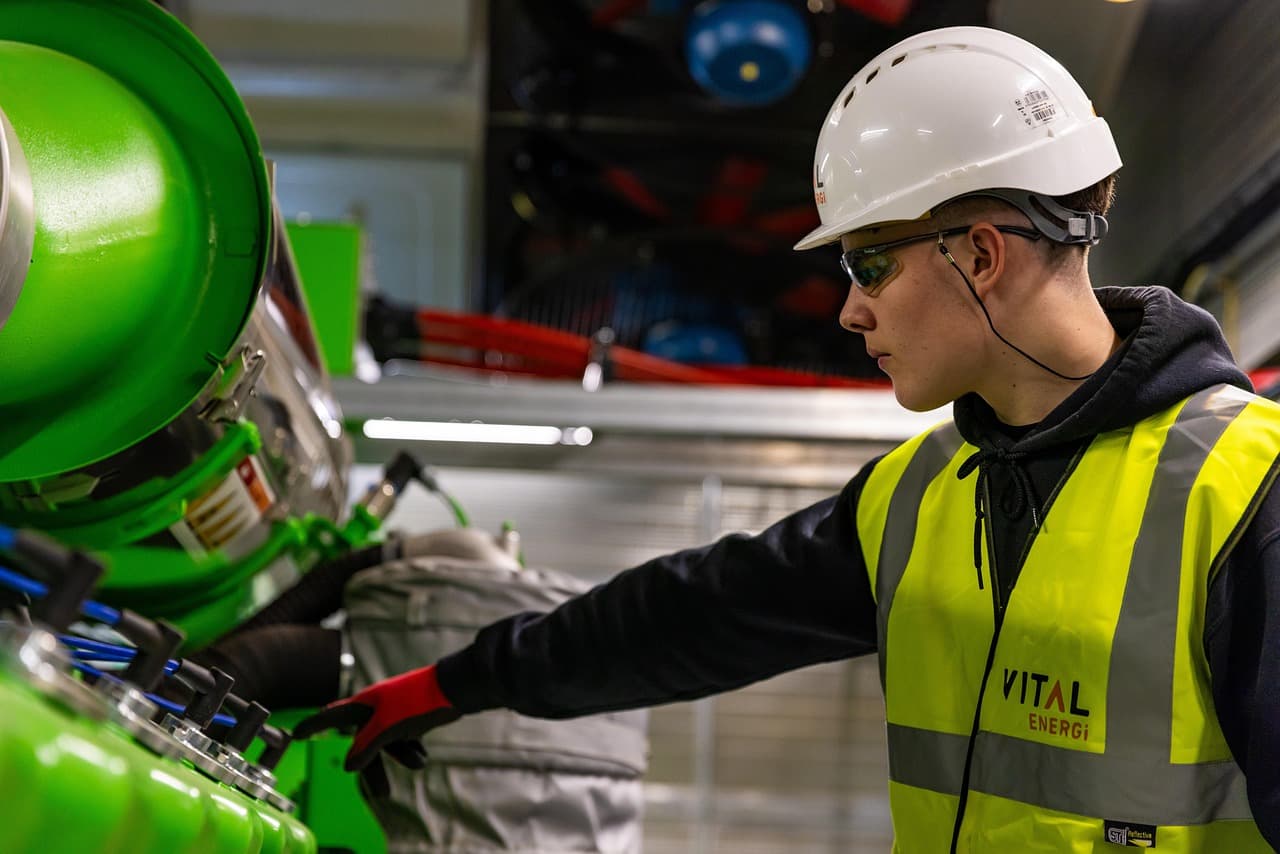
How Mobile Changes Maintenance Reporting on the Shop Floor
The era of paper forms, clipboard checklists and desktop-bound maintenance reporting is over. Mobile technology is reshaping how maintenance teams capture, report and act on data right where the work happens — on the shop floor. For operations with high asset intensity, even small delays in reporting can drive significant unplanned downtime and production losses. Mobile maintenance reporting eliminates those delays by empowering technicians to document work in real time, with rich context and accuracy that legacy approaches simply cannot match.
In this post, we'll explain how mobile maintenance reporting changes the game operationally, culturally and strategically — and why those changes matter for uptime, quality and cost control.
The Traditional Challenge: Delayed and Inaccurate Reporting
Maintenance reporting without mobile tools typically follows this sequence:
- Technician works on equipment.
- Notes findings on paper or memory.
- Returns to a terminal or office.
- Transcribes information into a system.
- Planner or manager finally sees the update.
Every hand-off introduces latency, error or omission — and all of these amplify uncertainty, reduce decision quality and slow corrective action.
That paradigm fails in environments where speed and accuracy are critical. Today's industrial maintenance requires real-time visibility to meet performance goals and reduce downtime.
What Mobile Reporting Actually Enables
Mobile reporting reimagines where and how data is collected. Instead of delaying documentation until after the fact, technicians use smartphones, tablets or connected devices to record information in the flow of work — immediately and with high fidelity.
Real-Time, On-Site Data Capture
Technicians using a mobile maintenance app can:
- Open and update work orders on the spot.
- Attach photos or videos to explain issues.
- Scan asset identifiers (e.g., QR codes, barcodes) to link data to the right machine.
- Log parameters such as running speeds, pressures or vibration readings directly.
This removes reporting delays and ensures that what is entered matches what was observed — a major improvement over memory-based reporting.
Better Accuracy and Rich Context
Traditional reporting often loses important context: which part exactly failed, what was the exact condition, how was it diagnosed? Mobile apps solve this by allowing:
- Mandatory fields and checklists to standardise entries.
- Photo/video attachments to visually document the issue.
- Voice-to-text or quick select options to speed up entry without sacrificing details.
These capabilities reduce errors and ensure compliance with maintenance standards.
Real-Time Communication and Collaboration
Mobile reporting is not just about data capture — it's about information flow:
- Technicians update a work order and planners see it instantly.
- Supervisors can send clarifications back through the same interface.
- Managers get immediate notifications for critical issues.
This shared live view collapses the communication gap between the floor and decision makers.
Tangible Operational Benefits
Faster Response and Reduced Downtime
When issues are reported instantly from the floor, response times improve. The right technicians can be dispatched faster, with clear information, reducing the time assets remain down.
Improved Maintenance Planning
Mobile reporting feeds accurate real-time data into planning and scheduling workflows. With reliable timestamps and detailed condition information, planners can:
- Prioritise work more effectively.
- Reduce rework and guesswork.
- Balance preventive vs corrective tasks.
Enhanced Safety and Compliance
Mobile tools allow safety checklists and lockout/tagout steps to be integrated directly into reporting workflows. Technicians can digitally sign off on compliance steps, creating audit-ready records that are timestamped and traceable.
Stronger Decision-Making
With rich, structured mobile data flowing into dashboards and analytics systems, maintenance leaders can spot trends earlier, justify investments and drive continuous improvement initiatives.
What Really Changes: From Reactive to Proactive
Mobile reporting doesn't just speed up documentation — it enables a culture shift:
- Reactive firefighting becomes less frequent as issues are visible sooner.
- Preventive and predictive maintenance programmes become more reliable because the data backing them is timely and accurate.
- Continuous improvement loops tighten because feedback from the floor arrives without friction.
This transition reduces unplanned downtime, extends asset life and improves worker satisfaction.
Practical Implementation Considerations
To successfully unlock these benefits, organisations should approach mobile reporting with a clear plan:
Start with the Right Tools
Mobile capabilities must integrate with the core maintenance management system (e.g., CMMS or EAM) and support features such as:
- Offline mode for connectivity dead zones.
- Intuitive UI prioritised for technicians.
- Native device features (camera, scanning, alerts).
Standardise Reporting Templates
Design standard fields and checklists aligned with internal KPIs (e.g., MTTR, MTBF) so that data collected is consistent and useful.
Train for Adoption
Even the best tools fail without adoption. Focus training on:
- How to capture accurate data quickly.
- How to use multimedia attachments effectively.
- How to interpret and act on reporting insights.
Monitor and Optimise
Track usage metrics and data quality. Solicit technician feedback and refine report templates and workflows for maximum efficiency.
Conclusion
Mobile reporting on the shop floor is not a nice-to-have — it is foundational to modern maintenance excellence. By capturing accurate, rich data at the source, organisations drive faster responses, better planning, safer operations and data-driven decisions. The result is lower downtime, clearer visibility into asset health and a more empowered maintenance team.
As maintenance teams embrace mobile technology, they transition from reactive firefighting to proactive, strategic operations — the competitive advantage in today's industrial environments.
How LeanReport Can Help
At LeanReport, we turn maintenance data chaos into clarity. Our connected reporting tools bring real-time shop floor insights into your dashboards, with structured inputs, multimedia documentation and powerful analytics that help you make decisions faster. Whether you're standardising mobile reporting or aiming for predictive maintenance, we can help you accelerate ROI.
Next step: Book a demo to see how mobile reporting with LeanReport improves uptime and maintenance effectiveness.
Mobile MaintenanceCMMSDigital TransformationMaintenance ManagementReal-Time Reporting
Frequently Asked Questions
What is mobile maintenance reporting?
Mobile maintenance reporting refers to capturing and submitting maintenance data (work orders, asset conditions, checklists, photos) directly from mobile devices on the shop floor in real time, replacing paper or delayed post-shift entry.
How does mobile reporting improve data quality?
By enabling technicians to enter information immediately with structured fields, multimedia context and asset linkage (QR/barcode scanning), mobile reporting eliminates guesswork and reduces errors.
Do mobile maintenance tools work offline?
Modern mobile maintenance apps often support offline operations, allowing data capture without connectivity that syncs when the connection is restored.
How does mobile reporting affect safety?
Integrating safety checklists and compliance steps into mobile workflows ensures procedures are followed and digitally documented, improving audit readiness.
What are common barriers to adoption?
Barriers include user resistance, lack of training, poor UI design and inadequate integration with existing systems — all solvable with planning and iterative improvement.
About the Author

Rhys Heaven-Smith
Founder - LeanReport.io
Rhys is the founder of LeanReport.io with a unique background spanning marine engineering (10 years with the Royal New Zealand Navy), mechanical engineering in process and manufacturing in Auckland, New Zealand, and now software engineering as a full stack developer. He specializes in helping maintenance teams leverage AI and machine learning to transform their CMMS data into actionable insights.
Related Articles
Best Practices
Setting Up an Annual Maintenance Report: Templates, KPIs and Structure
Learn how to build a strategic annual maintenance report with clear templates, meaningful KPIs and consistent structure that drives reliability and supports decision-making.
10 min read
Best Practices
Continuous Improvement for Maintenance: A Practical Data-Driven Framework
Learn a practical, data-driven continuous improvement framework for maintenance teams to reduce downtime and boost reliability using CMMS data.
9 min read
Best Practices
How to Turn a 5,000-Row CMMS Export into a One-Page Executive Summary
Learn how to transform a 5,000-row CMMS export into a concise one-page executive summary that highlights KPIs, trends and actionable insights for maintenance leadership.
9 min read